
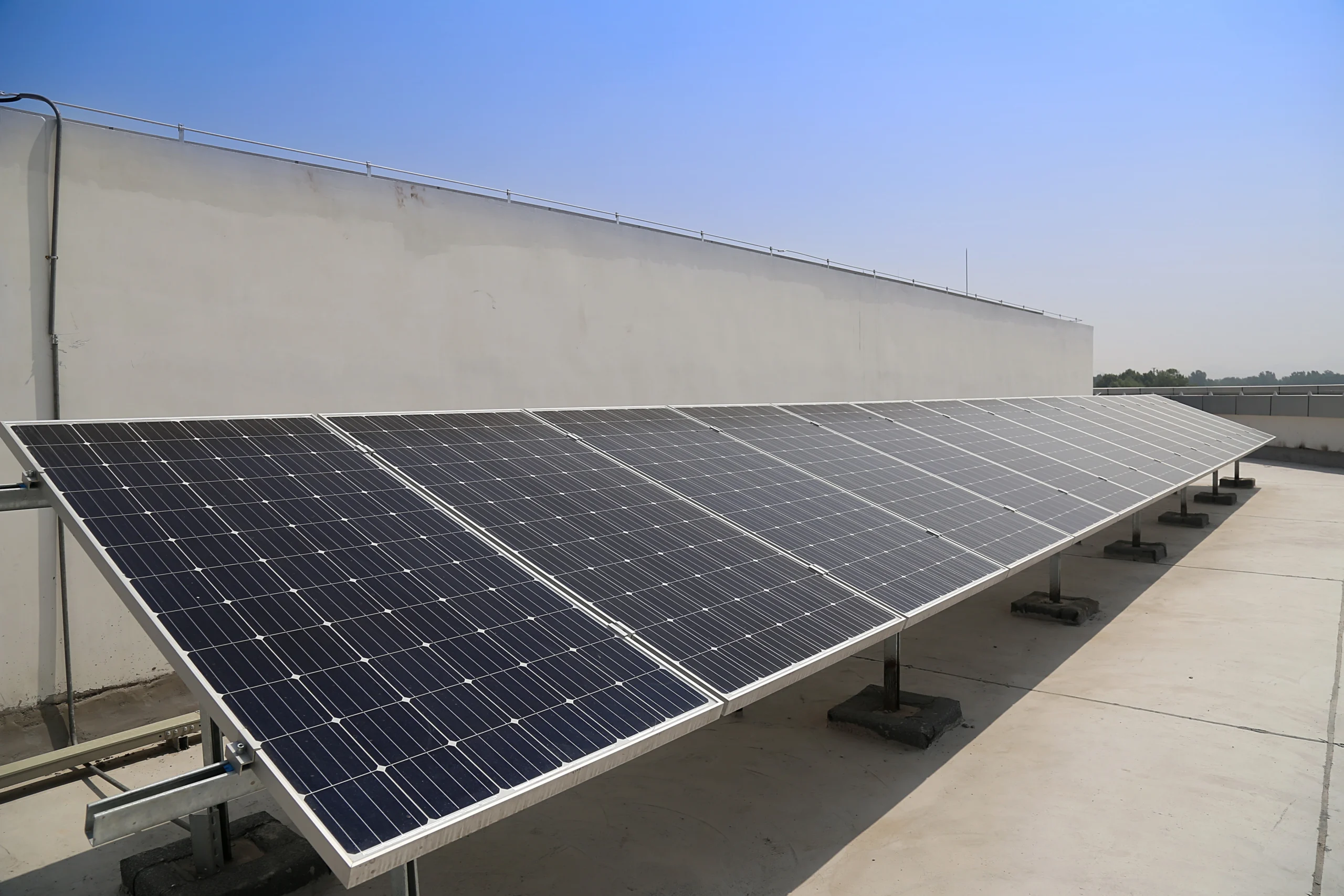
Introduction: Why 10 kW Systems Dominate in 2025
For Indian homeowners and mid-sized businesses, a 10 kW rooftop solar plant has become the sweet spot between power independence and affordability.
It comfortably runs a 4–5 BHK house, boutique hotel, or small office offsetting nearly 1.3–1.5 lakh ₹ in annual electricity bills while generating clean energy for two decades.
Rising grid tariffs, volatile fuel prices, and the government’s PM Surya Ghar Muft Bijli Yojana 2025 have accelerated adoption. Let’s decode the true 2025 cost, savings, subsidies, and ROI so you can plan confidently.
2. Snapshot: 2025 Pricing Overview
| System Type | Avg. Cost (₹) | After Subsidy (₹) | Best Suited For |
| On-Grid 10 kW System | 5.8 – 6.5 lakh | 4.3 – 5.0 lakh | Homes / Offices with stable grid |
| Hybrid (With Battery) | 8.0 – 9.5 lakh | 6.5 – 7.5 lakh | Areas with frequent outages |
| Off-Grid System | 9.0 – 10.5 lakh | — | Remote / Industrial locations |
Average generation: 40 – 45 units per day Annual output: ≈ 15,000 – 16,500 kWh
3. Component-wise Breakdown
| Component | Approx. Cost (₹) | % of Total | Details |
| Mono PERC Panels (10 kW) | 3.6 – 4.0 L | 55 % | High-efficiency 430–450 W modules |
| Solar Inverter (97 % eff.) | 1.0 – 1.2 L | 18 % | Hybrid / String type with Wi-Fi monitoring |
| Mounting Structure & BOS | 0.9 – 1.0 L | 15 % | HDGI tilt mount or MS ground mount |
| DC / AC Cabling & Earthing | 0.5 – 0.6 L | 8 % | MC4 connectors, SPDs, LA kit |
| Installation + Testing | 0.4 – 0.5 L | 4 % | Labour + DISCOM approval |
4. Government Subsidy & Tax Incentives
Residential Subsidy 2025
| Capacity Range | Central Financial Assistance (CFA) | |
| Residential Society | Above 3 kW | ₹ 18,000 / per kW |
| Residential Individual | Above 3 kW | ₹ 78,000 Max |
Eligibility: Rooftop system registered under PM Surya Ghar Muft Bijli Yojana, installed by MNRE-empanelled vendors.
Commercial Benefits
- 40 % Accelerated Depreciation (u/s 32 IT Act)
- GST Input Credit on equipment and installation
- Net Metering benefits via DISCOM
5. Regional Pricing & Savings Table
| City / State | Approx. Cost (₹) | Daily Output (kWh) | Yearly Savings @ ₹ 9 / unit |
| Mumbai, Maharashtra | 6.2 L | 42 – 45 | ₹ 1.35 L / yr |
| Delhi, NCR | 6.0 L | 40 – 43 | ₹ 1.25 L / yr |
| Ahmedabad, Gujarat | 5.9 L | 44 – 46 | ₹ 1.4 L / yr |
| Bengaluru, Karnataka | 6.3 L | 38 – 41 | ₹ 1.15 L / yr |
| Chennai, Tamil Nadu | 6.1 L | 40 – 42 | ₹ 1.2 L / yr |
| Jaipur, Rajasthan | 5.8 L | 46 – 48 | ₹ 1.45 L / yr |
| Kochi, Kerala | 6.5 L | 37 – 39 | ₹ 1.05 L / yr |
6. Five-Year Payback Simulation
| Year | Cumulative Units Generated | Annual Savings (₹) | Cumulative ROI |
| 1 | 15,000 | 1,35,000 | 23 % |
| 2 | 29,700 | 1,30,000 | 46 % |
| 3 | 44,000 | 1,25,000 | 69 % |
| 4 | 58,000 | 1,20,000 | 90 % |
| 5 | 72,000 | 1,15,000 | Payback Reached |
After Year 5, your electricity is virtually free for the remaining 20 years of system life.
Lifetime net gain ≈ ₹ 28–32 lakh.
7. Environmental Impact
| Metric | 10 kW System Impact / Year | 25-Year Lifetime |
| CO₂ Emissions Reduced | ~14 tons | 350 tons |
| Trees Equivalent Planted | ≈ 700 trees | 17,000 trees |
| Coal Saved | ≈ 5 tons | 125 tons |
Installing solar is not only financially smart but a direct climate action contribution to India’s Net-Zero 2070 mission.
8. Key Factors Affecting Total Cost
- Roof Type & Orientation – RCC flat roofs need tilt mounts (+₹ 25–40 k).
- Panel Efficiency – Mono PERC > Poly by ≈ 8 %.
- Inverter Selection – String vs Hybrid vs Microinverter.
- Local Sunlight Hours – Western states gain 10–15 % more yield.
- Labour & Permit Costs – Vary by city.
- Battery Backup – Adds ₹ 2.5–3 L for 25 kWh Li-ion storage.
9. Installation Process & Timeline
- Energy Audit & Load Assessment
- Site Survey & Shadow Analysis
- System Design + Component Finalization
- DISCOM Application & Approval
- Installation (7–10 days)
- Testing + Net-Meter Commissioning
Maintenance & Performance Monitoring
- Cleaning: Once every 15–20 days for dusty regions.
- Remote Monitoring: Smart inverter apps (Real-time generation data).
- Annual Service: Electrical tightening, MC4 check, earthing test.
- Warranty: Panels – 25 yrs (80 % output), Inverter – 10 yrs.
Expert Quote from Energyspoc Engineer
“In our experience across Maharashtra and Gujarat, 10 kW rooftop systems are producing 42–46 units daily with average annual savings of ₹ 1.3 lakh. The systems pay back within four years and run maintenance-free for over two decades.”
— Rohan Patil, Sr. Solar Engineer, Energyspoc
Frequently Asked Questions
Q 1. How much roof area is needed for a 10 kW system?
Around 700–800 sq ft of shadow-free space.
Q 2. Can it run AC and EV chargers together?
Yes handles 4 ACs + EV charger easily (peak 10 kW load).
Q 3. Do I need batteries for an on-grid system?
Not mandatory; grid acts as virtual storage via net metering.
Q 4. What is the life span of panels and inverter?
Panels 25 yrs, inverters 10 yrs (on avg).
Q 5. When is the best time to install?
Before Dec 31, 2025 to secure subsidy and avoid tariff changes.
Conclusion
A 10 kW solar panel system in 2025 delivers the best balance of capacity and cost.
With an investment of ₹ 5.8 – 6.5 lakh (after subsidy) and a payback period under 4 years, homeowners and SMEs can enjoy 25 years of free electricity, reduce dependence on DISCOMs, and cut carbon emissions substantially.
Energyspoc’s expert-led team designs custom 10 kW solutions that maximize ROI and ensure smooth government subsidy approvals.