
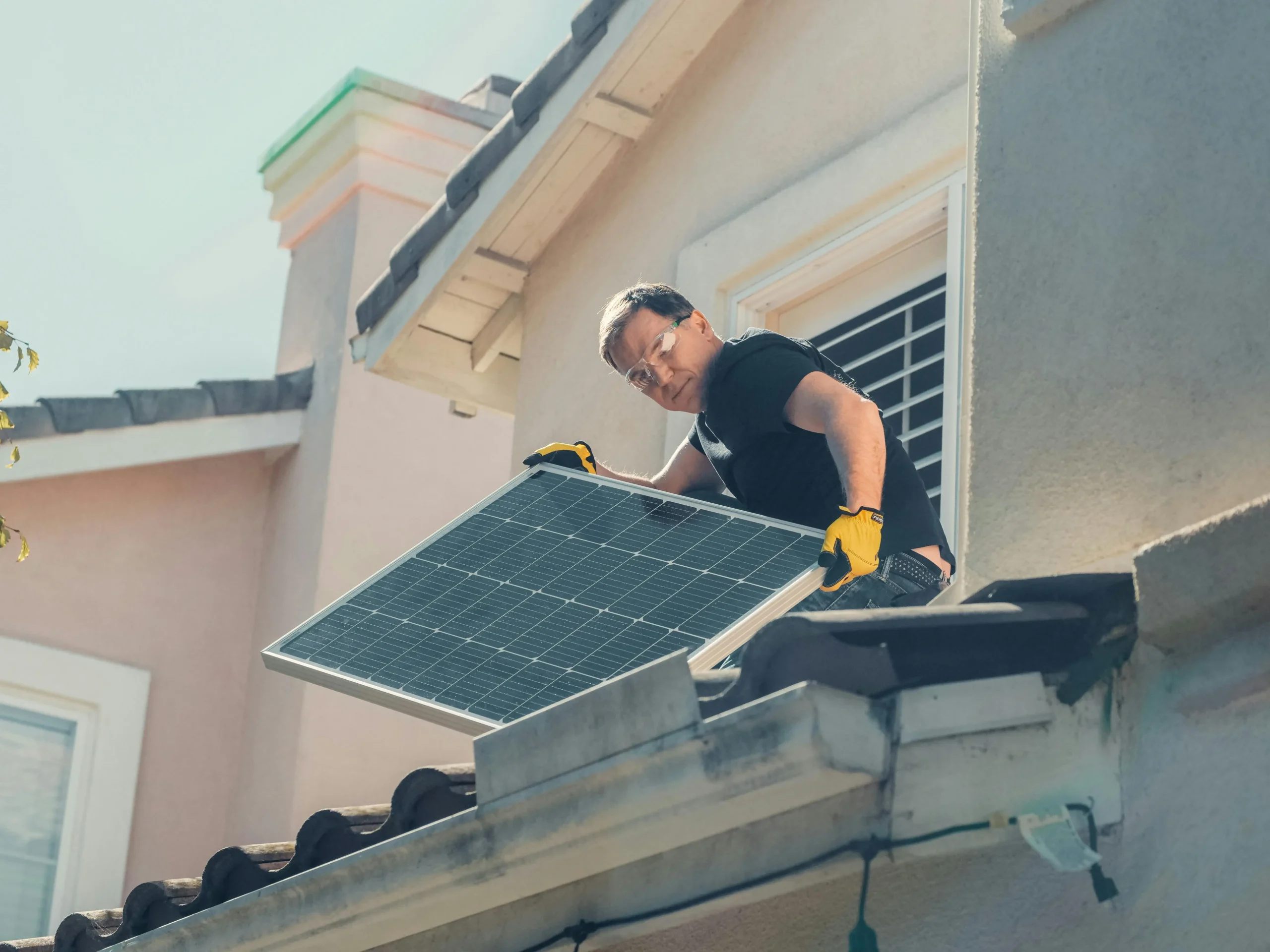
Thinking about solar panels for your home in India and not sure where to start? This simple, step-by-step guide explains how residential solar works, what system to choose, how much solar panel home installation cost can be, and how subsidies reduce your upfront bill.
Why Go Solar at Home
Homeowners across India are adopting solar because the technology is reliable, electricity bills drop meaningfully, and payback can be in the 6–8 year range when your roof gets good sun. Government support through the national rooftop program further lowers the cost of solar energy installation for home users, making the decision easier for beginners. If you plan smart, you can lock in predictable power costs for decades while reducing grid dependency.
How Home Solar Works
Sunlight hits the solar panels and frees electrons in the photovoltaic cells, creating direct current (DC) electricity. An inverter converts this DC into alternating current (AC) that runs your home appliances safely and efficiently. Excess energy can either go to the grid in on-grid systems or be stored in batteries in hybrid/off-grid systems for use at night or during outages.
Pick Your System: On-Grid, Off-Grid, or Hybrid
On-grid connects to the DISCOM and is the most common for city homes because it enables exporting excess power and generally has the lowest solar power installation cost. Off-grid uses batteries and suits remote areas with frequent power cuts but costs more due to storage needs. Hybrid blends both, giving backup through batteries while staying grid-tied. It’s flexible but has a higher cost of solar panel installation for home users than pure on-grid.
What Size Should You Choose
Many urban homes start with about 3 kW as a practical baseline, but your final size depends on your monthly units, roof area, shading, and budget. For context, a 3 kW solar panel installation for home in 2025 typically starts around ₹2.05 – ₹2.35 lakh with installation in big cities like Pune, Ahmedabad, Bengaluru, and Chennai — before subsidy and depending on product choices and site conditions. Always ask your installer to size the plant against your actual consumption and future appliance plans so you get the most value.
Understanding Solar Installation Cost in India
A helpful way to estimate solar installation cost is to look at per-watt pricing and a common system size like 3 kW. For 2025, many homeowners see turnkey quotes in the ₹1.89 – ₹2.15 lakh band, with per-watt ranges often between ₹75 – ₹85 depending on brand, structure, and site complexity.
Here are key factors that affect solar panel home installation cost:
- Components: panel and inverter type, mounting structure height, and material quality
- Site specifics: roof strength, shading, cable routes, and scaffolding or safety requirements for higher roofs
- Local charges: DISCOM application, net-metering hardware, and any city-specific compliance
- Service: after-sales commitments, warranties, and performance guarantees
Using clear language in your quote like “solar power installation cost” and “cost of solar panel installation for home” helps ensure every line item is covered and comparable across vendors.
Subsidy and How Much You Save
For residential rooftop systems, the MNRE subsidy is currently ₹30,000 for 1 kW, ₹60,000 for 2 kW, and a fixed ₹78,000 for 3 kW and above under the national program, subject to eligibility and portal process. With that, the same 3 kW system that starts near ₹2.05 – ₹2.35 lakh in many cities can drop by ₹78,000, leading to indicative post-subsidy starting prices like ₹1.27 – ₹1.57 lakh depending on the city and configuration. Over time, many homes report 30–40 % bill reduction and reach payback in about 6–8 years when the roof has good sun exposure and the system is well maintained.
Simple Steps to Get Started
- Assess your bills and roof: gather 12 months of electricity bills and check your roof for shade and usable area.
- Choose system type: on-grid for lowest cost and easy export, or hybrid if you want backup without a generator.
- Get 2–3 quotes: ask vendors to specify panel/inverter brand, structure, per-watt pricing, and complete solar panel installation for home scope.
- Apply for subsidy: follow the National Portal process via an approved vendor to remain eligible for the MNRE subsidy.
- Install, inspect, and monitor: complete commissioning, metering, and app-based monitoring so you can track generation and savings.
Realistic Price Snapshots for 2025
Indicative starting prices for 3 kW systems hover around ₹2.05 lakh in Pune and Ahmedabad and around ₹2.35 lakh in Bengaluru and Chennai, with post-subsidy starting figures commonly ₹1.27 – ₹1.57 lakh depending on the city. Broader homeowner estimates still fall in the ₹1.89 – ₹2.15 lakh band for 3 kW, with per-watt ranges of roughly ₹75 – ₹85 as a quick sanity check. If you compare on-grid vs hybrid, remember hybrid includes batteries and typically raises the total solar energy installation for home budgets.
Quick Tips for a Smooth Install
- Insist on BIS/MNRE-compliant components and check vendor experience in your city.
- Verify what’s included: structure height, wiring, earthing, protections, metering, and DISCOM paperwork.
- Plan for maintenance: keep panels clean and use the app or portal to track generation and call service if output dips.
Power Your Home with the Right Solar Partner
Ready to start installing solar power in your home the right way? Get two clear quotes, check the MNRE subsidy steps, and use the figures above to benchmark your solar panel home installation cost before you decide.
If you’re exploring clean energy for your home or business, you can reach out to EnergySPOC, your single point of contact for trusted solar solutions in India. Our team helps you simplify every step from design and financing to installation and support so you can go solar confidently and save for years ahead.