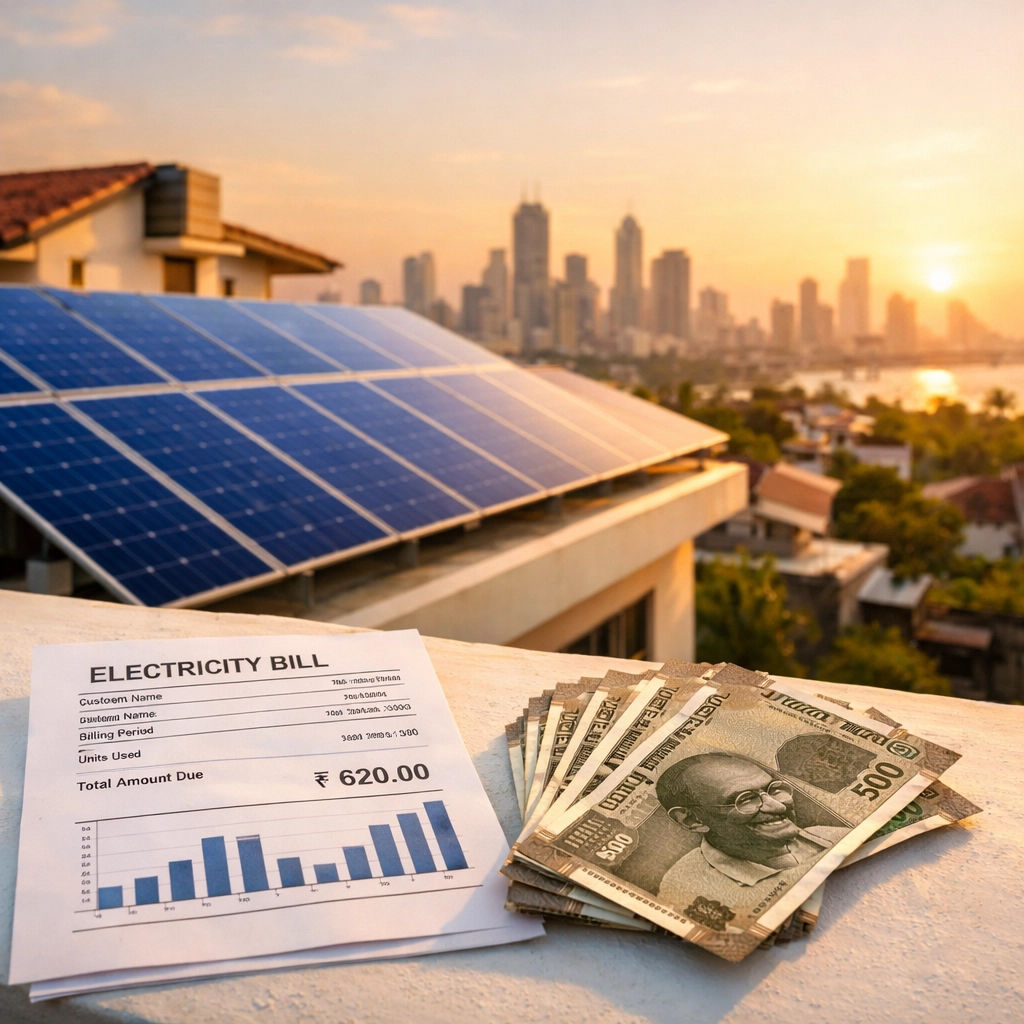
If you live anywhere in the Mumbai Metropolitan Region, Thane, Navi Mumbai, Pune, or even the extended suburbs, you already know the pain. That monthly MSEDCL, Adani, or Tata Power bill lands, and you just stare at it. ₹8,000? ₹12,000? Sometimes more during summer when the AC runs non-stop.
What if I told you the government is basically handing you ₹30,000 to ₹78,000 to put solar panels on your roof? And that once it's up and running, you could slash your monthly electricity bill by 90%?
Sounds too good to be true, right? Let's break it down.
What's This "90% Off" Thing Actually Mean?
Here's the deal: The 90% figure you're seeing everywhere isn't a discount on the solar panels themselves. It's the amount you'll save on your monthly electricity bill once your rooftop solar system is up and running.
Under the PM Surya Ghar Muft Bijli Yojana (which Maharashtra follows through MSEDCL's infrastructure), you get:
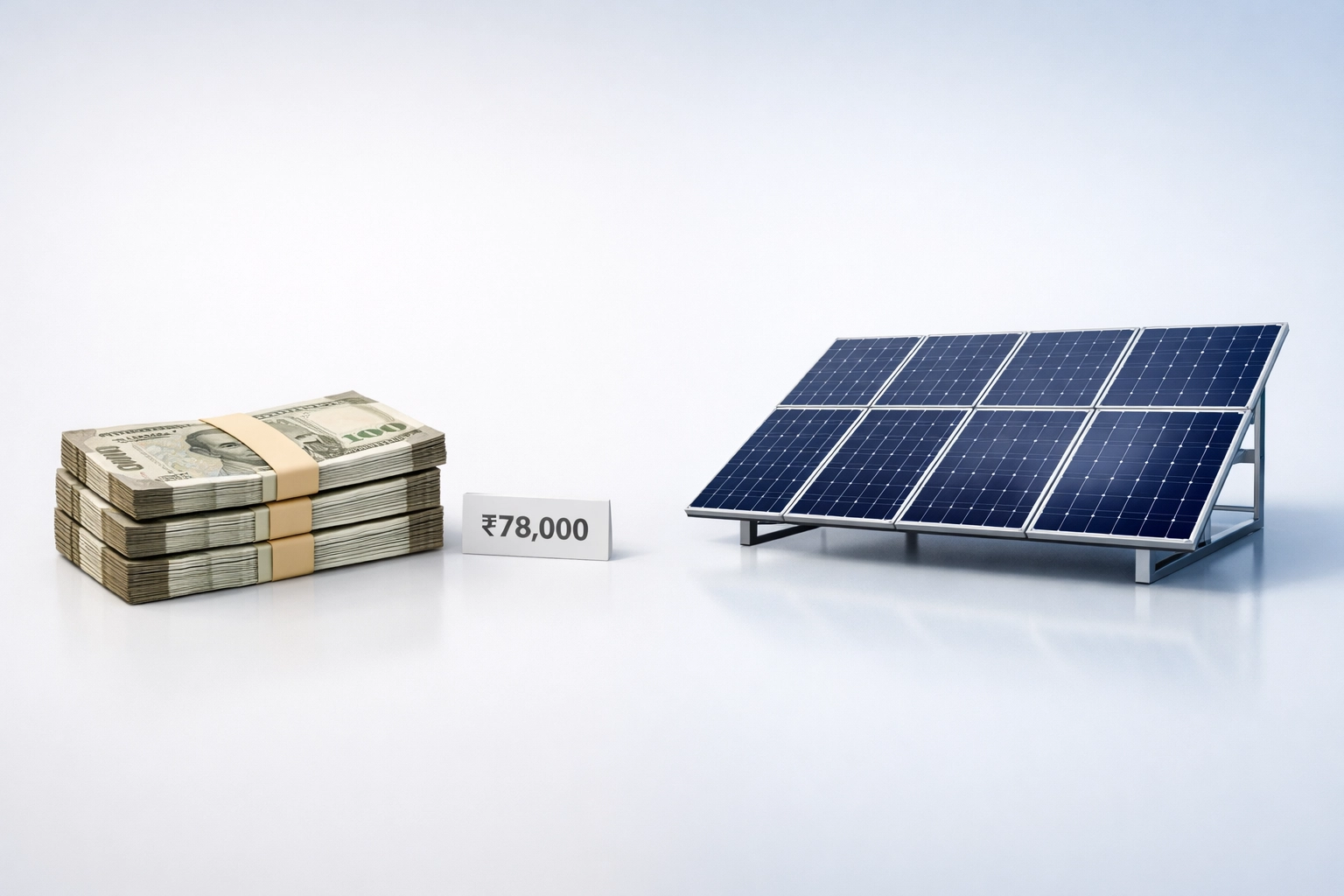
- ₹30,000 to ₹78,000 in direct subsidy to offset the installation cost
- Up to 300 units of free electricity per month from your solar panels
- The ability to cut your MSEDCL bill by as much as 90% depending on your consumption
So yes, you're getting a fat cheque from the government to install solar, AND you're getting most of your electricity for free after that. It's a double win.
How Much Subsidy Do You Actually Get?
Let's talk numbers. The subsidy isn't a percentage, it's a fixed amount based on the size of your solar system:
| System Size | Government Subsidy |
|---|---|
| 1 kW | ₹30,000 |
| 2 kW | ₹60,000 |
| 3 kW or more | ₹78,000 (capped) |
Notice something? Whether you install a 3 kW system or a 10 kW system, the subsidy maxes out at ₹78,000. So for most Mumbai homes (where a 3-5 kW system is typical), you're looking at ₹78,000 off your installation cost.
Here's what that looks like in real terms:
- 3 kW system typically costs around ₹1,80,000. After subsidy? You're paying ₹1,02,000 out of pocket.
- 5 kW system runs about ₹2,50,000. Subtract ₹78,000, and you're at ₹1,72,000.
And with EnergySPOC's financing partners, you can break that into EMIs that are often lower than your current monthly electricity bill. Think about it, you're paying the same (or less), but you OWN the system at the end.
Who's Eligible? (And Who's Not)
The government isn't just throwing money at everyone. Here's who qualifies:
You're good to go if:
- You're an Indian resident over 18 years old
- Your annual household income is less than ₹1.5 lakhs (this is self-declared, by the way)
- You own the house (or apartment) where you want to install solar
- You have a valid MSEDCL/Adani/Tata Power electricity connection
- Your roof has enough unshaded space for solar panels (roughly 100 sq ft per kW)
You're out of luck if:
- You're renting (sorry, landlords only for now)
- You try to DIY the installation or use a random contractor
- Your roof is completely shaded by trees or nearby buildings
The biggest mistake we see? People trying to save money by using non-registered vendors. If your installer isn't MNRE-approved, you won't get a single rupee in subsidy. Zero. We've seen it happen.
The Application Process (Simplified)
Look, the official process has 10 steps and involves multiple government portals. It's a mess. But here's the basic flow:
- Register on the PM Surya Ghar portal with your electricity consumer number
- Get feasibility approval from MSEDCL (they check if your connection can handle solar)
- Choose an MNRE-approved vendor like EnergySPOC to do the actual installation
- Apply for net metering (this lets you send excess power back to the grid and get credits)
- MSEDCL inspects your system and issues a commissioning certificate
- Submit your bank details on the portal
- Wait for the subsidy to hit your account (usually within 30 days)
Sounds like a lot? That's because it is. And this is where most people give up or make mistakes that cost them the subsidy.
Documents You'll Need (Keep These Handy)
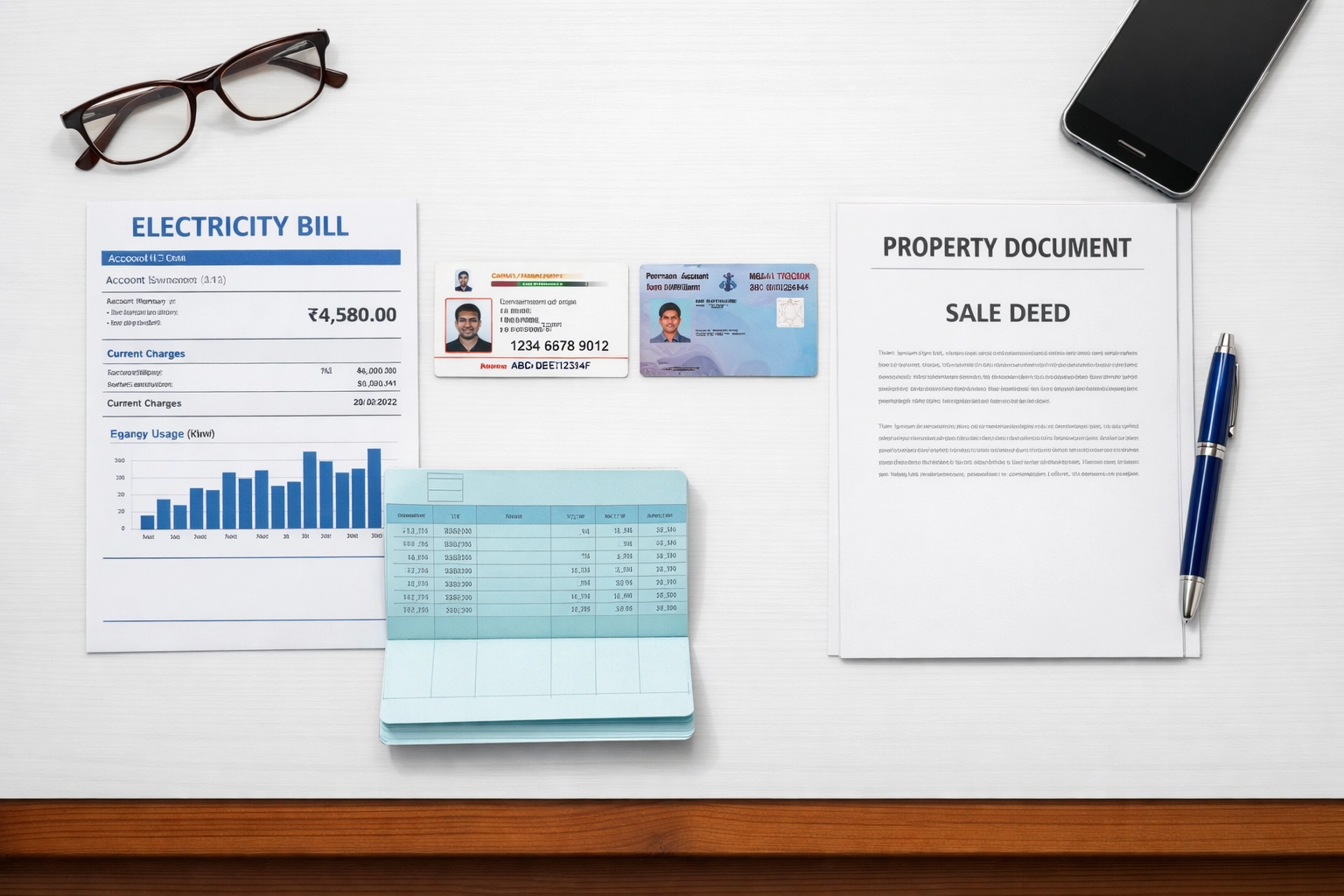
Before you even start, gather these:
- Recent electricity bill (not older than 3 months)
- Aadhaar card linked to your electricity account
- PAN card
- Property ownership proof (sale deed or property tax receipt)
- Bank passbook or cancelled cheque
- Installation completion report from your vendor (this comes later)
Missing any of these? Your application gets rejected. We've seen it happen with incomplete Aadhaar linking more times than we can count.
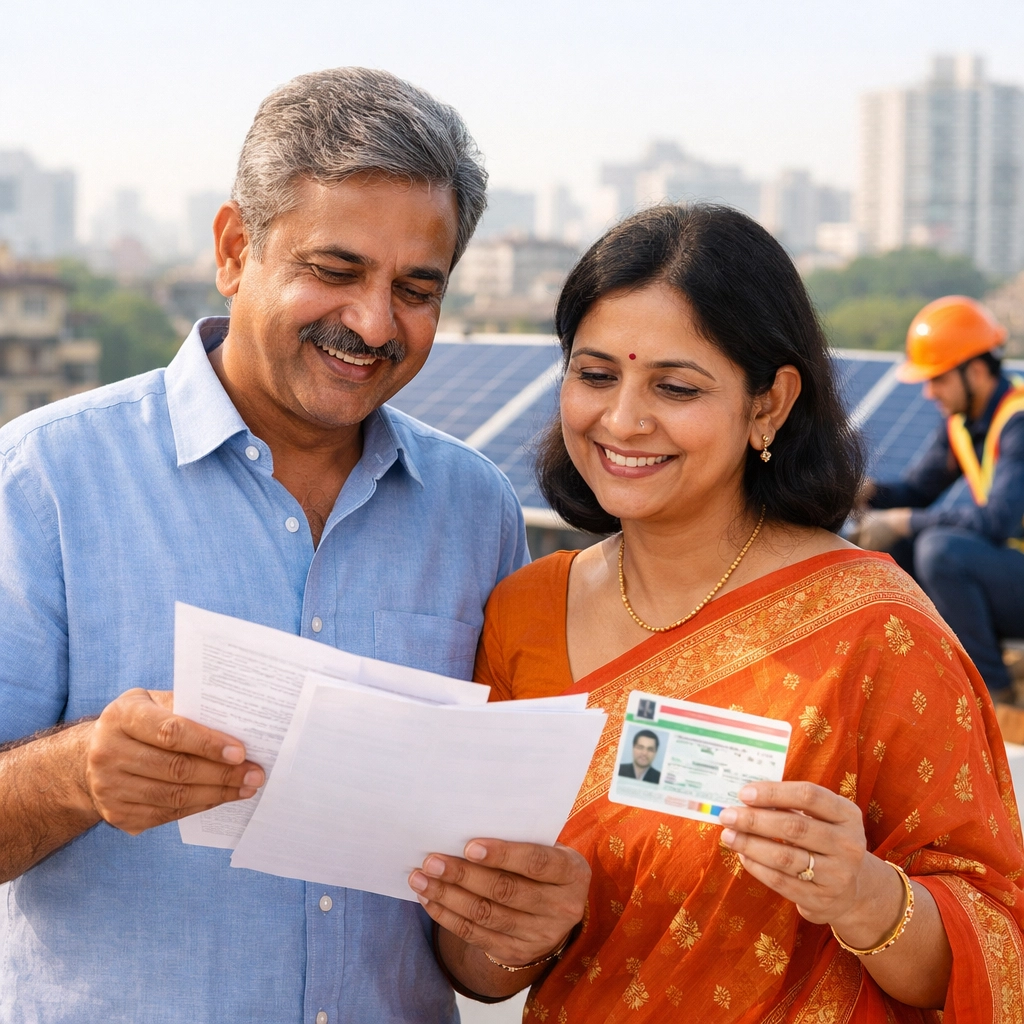
Common Mistakes That Kill Your Subsidy
After installing solar for hundreds of homes across Mumbai and Thane, we've seen these screw-ups repeatedly:
1. Using Non-Registered Vendors
Your cousin's friend who "does solar" isn't going to cut it. Only MNRE-empaneled companies qualify. EnergySPOC is fully registered: we handle the paperwork so you don't have to chase MSEDCL.
2. Net Metering Delays
This is the biggest headache. MSEDCL can take weeks (sometimes months) to approve net metering if you don't follow up correctly. We manage this entire process for our clients.
3. Wrong System Size
Installing a 2.5 kW system when you could've done 3 kW for the same subsidy (₹78,000) is just leaving money on the table. We do a proper load analysis before recommending a size.
4. Incomplete Documentation
One missing signature or an outdated electricity bill, and your application gets bounced back. Start over. We double-check everything before submission.
Why EnergySPOC Handles the Entire Headache
Here's the truth: the subsidy process is designed to make you give up. Multiple portals, DISCOM approvals, net metering applications, inspection scheduling: it's built for bureaucracy, not for busy homeowners.
That's why we exist.
When you go with EnergySPOC, here's what happens:
- We handle the entire subsidy application from start to finish
- We're MNRE-approved, so your subsidy is guaranteed (if you're eligible)
- We manage net metering approvals with MSEDCL, Adani, or Tata Power
- We have 20+ financing partners offering EMIs as low as your current monthly bill
- We provide end-to-end installation: from site survey to commissioning certificate
You literally just sign some forms and let us do the rest. Once your system is live, you start saving immediately.
What Happens After Installation?
Once your rooftop solar is running, here's what your life looks like:
- Your MSEDCL bill drops by 70-90% depending on your system size and consumption
- You get up to 300 units of free electricity per month (that's roughly ₹2,000-₹2,500 saved)
- Excess power goes back to the grid through net metering: MSEDCL credits you for it
- Your system pays for itself in 3-5 years, then it's pure savings for the next 20+ years
And if you're in a building society? There's a separate subsidy structure for common area installations (lifts, water pumps, society lighting). That's ₹18,000 per kW, and we handle those too.
Ready to Stop Paying ₹10,000+ Monthly Bills?
The subsidy isn't going to last forever. Government schemes change. Caps get reduced. Right now, in February 2026, the ₹78,000 subsidy is live and available.
If you're tired of watching your hard-earned money disappear into MSEDCL's pockets every month, it's time to make the switch.
Get a free site survey and subsidy eligibility check from EnergySPOC.
👉 Check out our solar packages here or get in touch with us to start the process.
We've done this hundreds of times. We know the shortcuts. We know which MSEDCL officer to call when your file is stuck. We know how to get your net metering approved in 15 days instead of 3 months.
You just need to decide: Keep paying, or start saving.
The subsidy is waiting. Your roof is waiting. What are you waiting for?