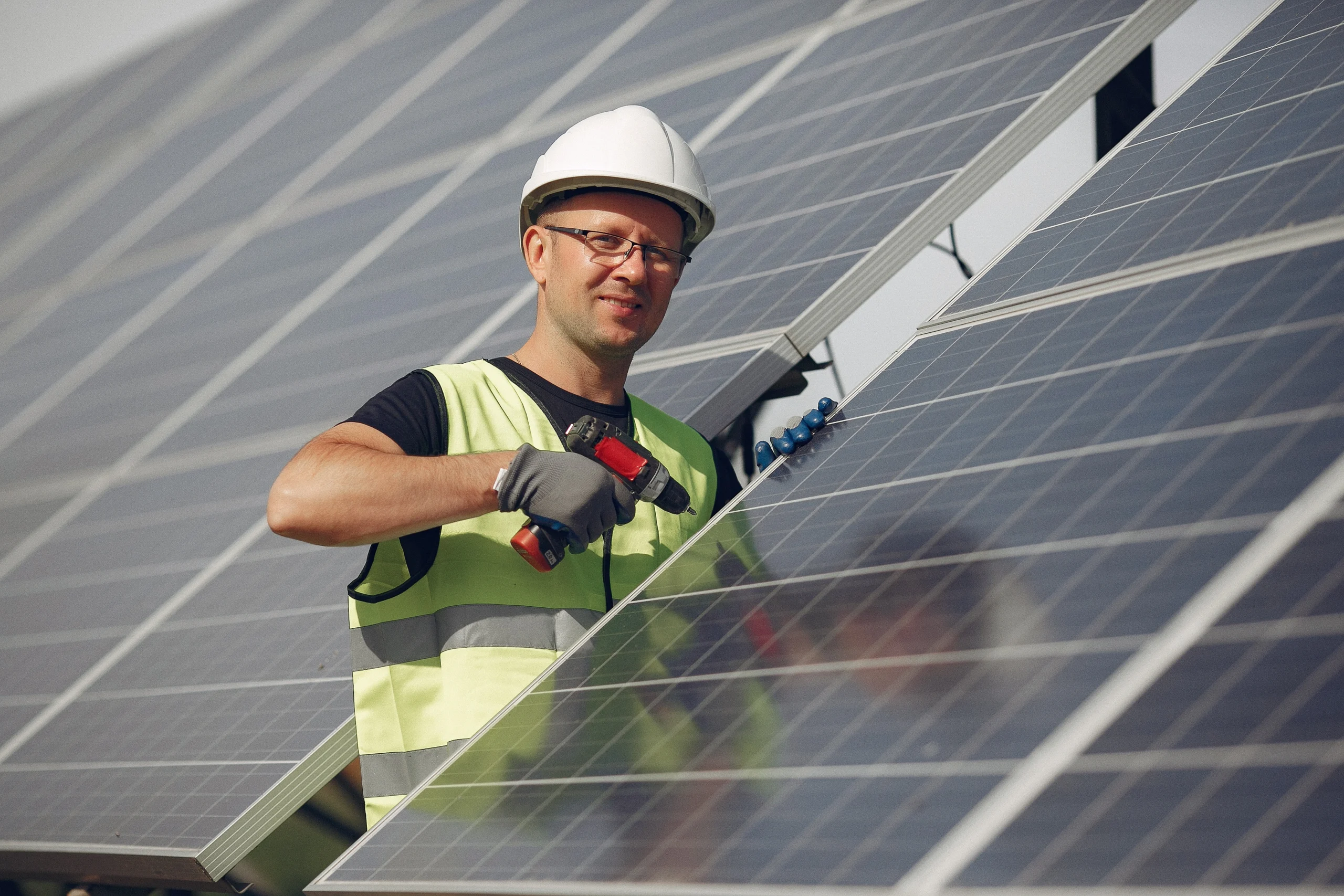
Every commercial roof is built differently, and your solar plant must match it. Before installing solar, it helps to know which method works best for your building. Here’s a simple guide to get you started.
More companies today are turning to solar power to cut electricity costs, improve ESG scores and reduce reliance on the grid. But when it comes to commercial buildings, the roof is not “just empty space.” The wrong mounting method can lead to leaks, structural stress and lower energy output. That is why understanding the roof type is the first big step in any industrial solar installation.
Commercial and industrial buildings come with many kinds of roofs metal sheds, RCC flat roofs, tiled slopes and more. Each roof behaves differently and needs a specific installation method to stay safe and deliver high performance.
This guide breaks down the most common commercial roof types, the mounting systems used on each, and how choosing the right industrial solar installation partner makes the entire process smooth, safe and cost-effective.
The Most Common Commercial Roof Types
Business and industrial premises usually fall into four main roof categories:
Standing seam metal roofs: Often seen in new industrial sheds and warehouses.
Trapezoidal or corrugated metal sheet roofs: Very common in factories, logistics centres and production units.
Flat RCC roofs: Popular on offices, malls, hospitals, schools and large commercial complexes.
Tiled or sloped roofs: Found on older buildings, showrooms, smaller commercial structures or institutional properties.
Some older roofs like brittle metal sheets or aged waterproof membranes may not be ready for solar without repair or reinforcement. A reliable industrial solar installation company will always check the roof’s structure, age, load capacity and condition before suggesting any design.
Core Mounting Methods: Rail, Rail-Less and Ballasted Structures
Rail-Mounted Systems
Rail-mounted systems are the most widely used. Here, strong aluminium or steel rails are fixed to the roof, and solar panels are attached to these rails.
They work well on standing seam roofs, trapezoidal sheet roofs and even flat roofs when paired with tilt structures. Rail systems offer flexibility in layout, help maintain proper alignment and allow good airflow under the panels. This airflow keeps the panels cooler and boosts energy production.
The advantage is that they are robust and suitable for high-wind industrial sites. The only drawback is that they come with more components and take slightly longer to install.
Rail-Less Systems
In rail-less mounting, solar panels are fixed directly to roof brackets without long rails. This reduces weight and material use, which is helpful for roofs with limited load capacity or older sheds that were not originally designed for solar.
Rail-less systems follow the existing roof slope, so they work best on pitched roofs that already face a good direction for sunlight. They are not ideal for flat roofs because flat roofs need tilted structures to catch maximum sunlight.
Ballasted and Tilt Structures (Mainly for Flat Roofs)
Ballasted systems use frames held in place by concrete blocks or similar weights. This means you can install solar on a flat RCC roof without drilling holes into the surface.
Tilt structures with or without penetrations set the panels at the ideal angle to maximise energy generation. The design must manage wind load, avoid shading from one row to another and ensure safe movement for cleaning and maintenance.
The choice of method directly affects performance and return on investment (ROI) for business solar panel installation, so selecting the right system matters.
Best Installation Approaches for Different Commercial Roofs
Standing Seam Metal Roofs
Standing seam roofs are known to be very “solar-friendly.” Special clamps can attach to the seams without drilling the sheet, reducing leak risks and keeping the roof safe.
Rail or rail-less clamp-based systems work well here. These systems spread the load evenly and are commonly used for warehouses and production plants undergoing industrial solar installation.
Key design considerations include seam spacing, wind resistance, maintenance pathways and ensuring that solar panels do not block or disturb rooftop machinery.
Trapezoidal / Corrugated Metal Sheet Roofs
These roofs are found across most factories, industrial parks and logistics centres. They usually need special brackets that are fixed into the purlins or the high points of the sheet.
Rail systems with trapezoidal brackets are common, but modern rail-less brackets can also reduce the number of roof penetrations while keeping everything waterproof. Skilled solar EPC contractors in India make sure fixing points match structural members and use certified fasteners and sealants to protect the roof.
Flat RCC Commercial Roofs
Flat concrete roofs are strong and offer excellent load-bearing capacity. This makes them suitable for tilt structures or ballasted frames.
Tilt structures allow panels to sit at the best angle for sunlight, while ballasted frames avoid drilling. Effective design must avoid self-shading, leave space for HVAC units, and keep access paths clear for cleaning and repairs. These choices can shape the long-term success of business solar panel installation on flat roofs.
Tiled and Sloped Roofs
Tiled roofs need careful handling. Brittle clay or slate tiles may need replacing with mounting-friendly solutions. Stronger tiles and shingles allow hook-based mounting, but waterproofing must be done with great care.
Rail systems with properly flashed hooks are usually used to keep the roof safe. While these roofs are less common in industrial settings, they still appear on small commercial buildings, showrooms and institutional properties.
Key Technical Factors Before You Choose a Method
Roof age and condition: If a roof is old or has leakage issues, it should be repaired before installing a long-life solar plant.
Load capacity: The roof must handle the weight of panels, rails or ballast, and allow safe movement for technicians.
Slope, orientation and shading: Pitched roofs may perform differently depending on angle and direction. Flat roofs need tilt optimisation to get maximum sunlight.
Maintenance access: Walkways, cleaning routes and safety clearances must be built into the design.
A good industrial solar installation company will inspect all these factors through surveys, structural checks and energy simulations before suggesting any mounting method.
When a Ground-Mount or Carport Beats the Roof
Sometimes the roof is too crowded with machinery, skylights or vents. In other cases, the structure may not be strong enough for a full solar plant.
In such situations, a ground-mounted system or a solar carport can be a smarter option. These offer more flexibility, allow larger solar capacities and are easier to maintain. This still counts as business solar panel installation, just located in a better area of the premises.
Why the Right Solar Partner Matters for Commercial Roofs
Selecting the right mounting method is not only about hardware. It affects the safety of your building, the panel warranties, the energy generation and the long-term reliability of the plant.
This is why businesses should work with trusted solar EPC contractors in India who understand multiple roof types and have experience across industries. The right team will:
- Offer proven design quality and certified mounting systems
- Follow industry standards
- Provide end-to-end engineering, procurement, installation and ongoing O&M
- Guide you through layout choices, shading analysis and future expansion plans
Future-Ready Solar Starts With Careful Planning
At EnergySPOC, we know that every roof needs a different approach to business solar panel installation. That’s why we study your roof type, structure and load capacity before we design anything. With our experience in industrial solar installation, we choose the right mounting method so your system stays safe, efficient and long-lasting.
Whether it’s a metal shed, RCC roof or a complex industrial site, we use proven engineering and certified systems to deliver reliable performance. As a trusted industrial solar installation company, we help businesses get clean energy with lower risk and better returns.
If you want a future-ready setup backed by expert solar EPC contractors in India, we’re here to guide you end-to-end.