
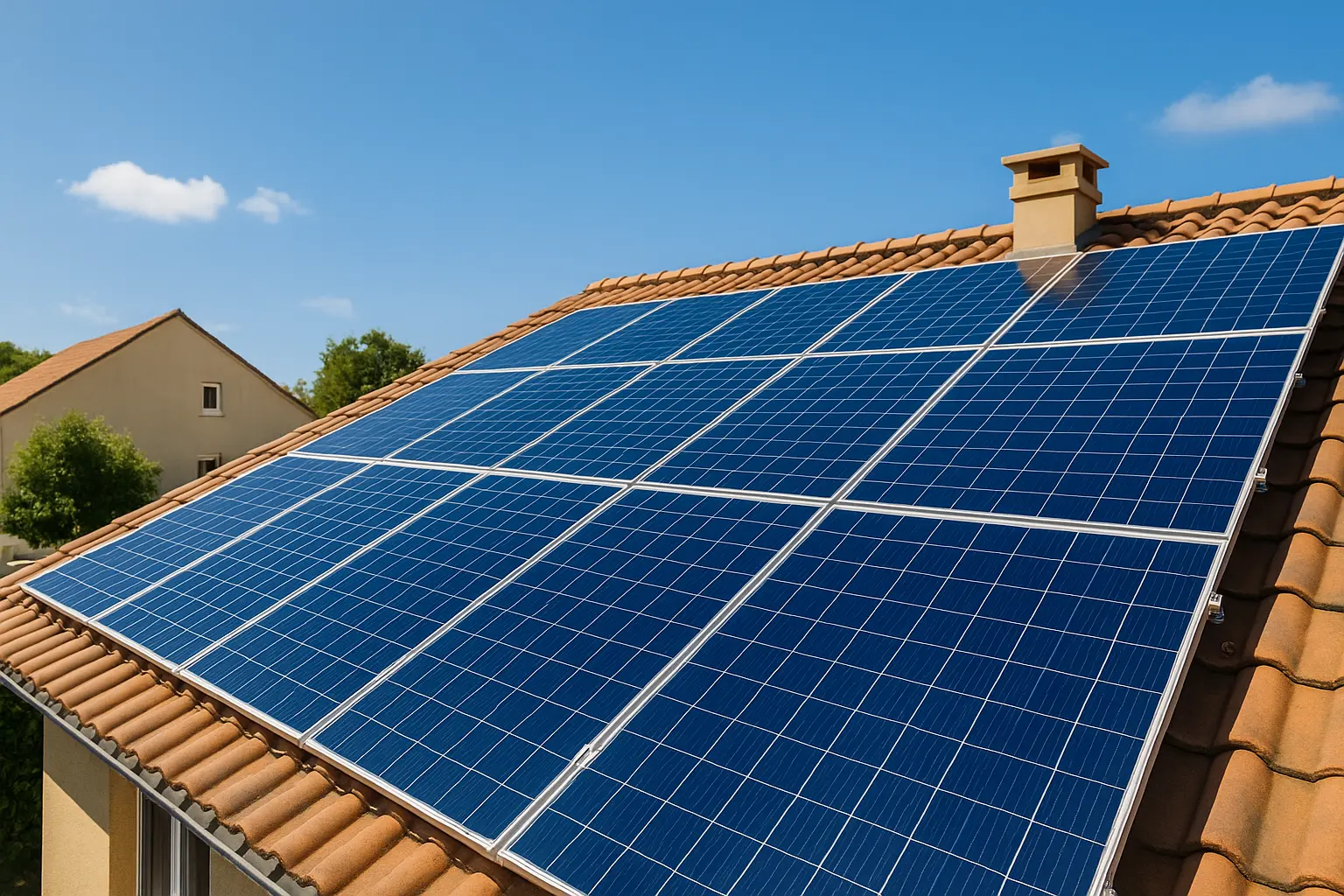
Reliable energy starts with the right solar setup, and choosing the correct solar panel size is a key part of it. The size of your solar panels affects the electricity they generate, how well they fit on your roof, and how efficiently your system works. Getting it right means balancing your energy needs, roof space, and long-term savings.
In this blog, we will break down the solar panel size guide for homeowners, covering standard panel sizes, the difference between residential and industrial solar panels, how to calculate the number of panels you need, and other important factors. By the end, you’ll have a clear understanding of how to pick panels that fit your roof, your budget, and your energy goals.
Why Solar Panel Size Matters
The size of a solar panel plays a direct role in how much electricity it can produce and how easily it can be installed. Larger panels generally generate more power because they have more solar cells, but they also take up more space and can be heavier to handle. Smaller panels are easier to fit around roof features like vents or chimneys, but they produce less energy per module.
Choosing the right solar panel size is about finding a balance. You want panels that meet your energy needs without overcrowding your roof or making installation complicated. The right size also affects cost, efficiency, and long-term performance.
By understanding the impact of panel dimensions, homeowners can plan their solar system to provide reliable energy while keeping installation smooth and practical.
Standard Solar Panel Sizes in India
Most residential and commercial solar installations in India follow standard panel formats that balance power output and ease of installation. For homes, the most common option is the 60-cell panel. These panels are usually around 1.6–1.7 meters tall and 1 meter wide, producing between 250 W and 400 W depending on the technology.
For larger projects, 72-cell panels are widely used. Measuring roughly 2 meters by 1 meter, these panels generate 400 W to 600 W each. Many modern panels now use half-cut cell technology, effectively doubling the number of cells (like 120 or 144) for better efficiency without changing the overall size.
These standard sizes have stood the test of time because they are large enough to generate substantial power but compact enough to handle and mount safely on rooftops or commercial structures.
Residential vs Commercial Solar Panels
Homes prioritize flexibility and aesthetics, while factories and large projects focus on maximum output and cost efficiency. Here’s a clear breakdown to help you choose the right panels for your roof or site:
Residential Solar Panels
- Cell Count: 60 full cells or 120 half-cells
- Dimensions: ~1.6–1.7 m tall × 1 m wide
- Power Output: 300 – 400 W per panel
- Installation: Lightweight and easy to lift; fits around chimneys, vents, and skylights
- Ideal Roofs: Sloped or smaller residential rooftops
Commercial Solar Panels
- Cell Count: 72 full cells or 144 half-cells
- Dimensions: ~2–2.1 m × 1–1.1 m
- Power Output: 450 – 600 W per panel
- Installation: Heavier, but fewer panels needed for high-capacity systems; simplifies wiring and mounting
- Ideal Roofs: Wide, flat industrial roofs, warehouses, or ground-mounted arrays
| Feature | Residential Panels | Commercial Panels |
| Overall Size | ~1.6–1.7 m × 1 m | ~2–2.1 m × 1–1.1 m |
| Cell Count | 60 full / 120 half | 72 full / 144 half |
| Output per Module | 300–400 W | 450–600 W |
| Handling on Site | Light, easy to place around roof features | Bigger and heavier, but fewer modules needed |
| Ideal Mounting Surface | Sloped or flat residential roofs | Wide, flat industrial roofs or ground racks |
Key Note: Policy rules, like MNRE’s Virtual Net-Metering cap for group housing, often split rooftop arrays. Knowing panel footprints helps plan layout efficiently. In India, residential and commercial systems may use similar technologies, such as monocrystalline PERC, but scaled differently in size.
How to Size a Solar Panel System
Sizing your solar system ensures you generate enough electricity without wasting space or money. Follow these steps to find the right setup for your home:
1. Determine Your Monthly Electricity Consumption
- Check your electricity bills to find your average monthly usage in kWh (kilowatt-hours).
- Example: A household using 300 kWh per month forms the basis for your system size calculation.
2. Estimate Required Solar Capacity
- Most regions in India receive 4 to 5 hours of peak sunlight each day.
- A 1 kW system can generate roughly 4 kWh/day or 120 kWh/month.
- Example: 300 kWh ÷ 120 kWh ≈ 2.5 kW system required.
3. Choose Solar Panel Wattage
- Decide on panel wattage based on available options.
- Example: Using 335 W panels, you would need 8 panels (8 × 335 W ≈ 2.68 kW).
- Using 500 W panels, only 5 panels are needed for the same capacity.
4. Check Roof Space and Fit
- Calculate area required based on panel size:
- 1.7 m² per 300–335 W panel
- 2.3–2.5 m² per 500–600 W panel
- Ensure panels fit comfortably on your roof, leaving space for airflow and maintenance.
5. Consider Orientation and Tilt
- South-facing roofs receive the most sunlight, although east and west orientations are also effective.
- Split panels across multiple faces if necessary to maximize exposure.
6. Allow Maintenance Space
- Leave gaps between panels and around edges for cleaning and access.
- Example: If your roof fits exactly ten panels edge-to-edge, consider installing nine panels and leaving a 30 cm service path.
7. Plan for Future Expansion
- If you anticipate higher electricity use (EVs, new appliances), size your system slightly larger.
- Account for shading or reduced sunlight in some areas.
Key Takeaway:
- The right system balances your energy needs, available roof space, and panel output.
- Higher-wattage panels reduce the number needed, saving space, while smaller panels offer flexibility in layout.
Key Factors to Consider Beyond Size
Choosing the right solar panels isn’t just about size. Here are some key factors to remember:
- Panel Efficiency: Look for high-efficiency panels like Mono PERC or N-type TOPCon. They produce greater amounts of electricity within the same space.
- Temperature Coefficient: Panels perform better under heat when this value is low, giving steady output in hot afternoons.
- Bifaciality & Light-Induced Degradation: Bifacial panels capture sunlight from both sides, and low light-induced degradation ensures consistent performance in the first year.
- Quality & Reliability: Opt for trusted brands and ensure inverter compatibility and proper Balance of System design for smooth, long-term operation.
These factors help maximize energy production and system longevity.
Power Your Home with the Right Solar Panel Size
Choosing the right solar panel size is key to getting the most from your rooftop—maximizing efficiency, saving on electricity bills, and ensuring long-term performance. The right size, combined with quality panels and proper installation, turns your roof into a reliable source of clean energy.
At EnergySPOC, we guide homeowners through every step. From selecting the right panel size and technology to designing a system that maximizes output. Our team also ensures smooth, hassle-free installation and ongoing support.
Get in touch today for a free assessment or consultation and start your journey toward smarter, sustainable energy.