
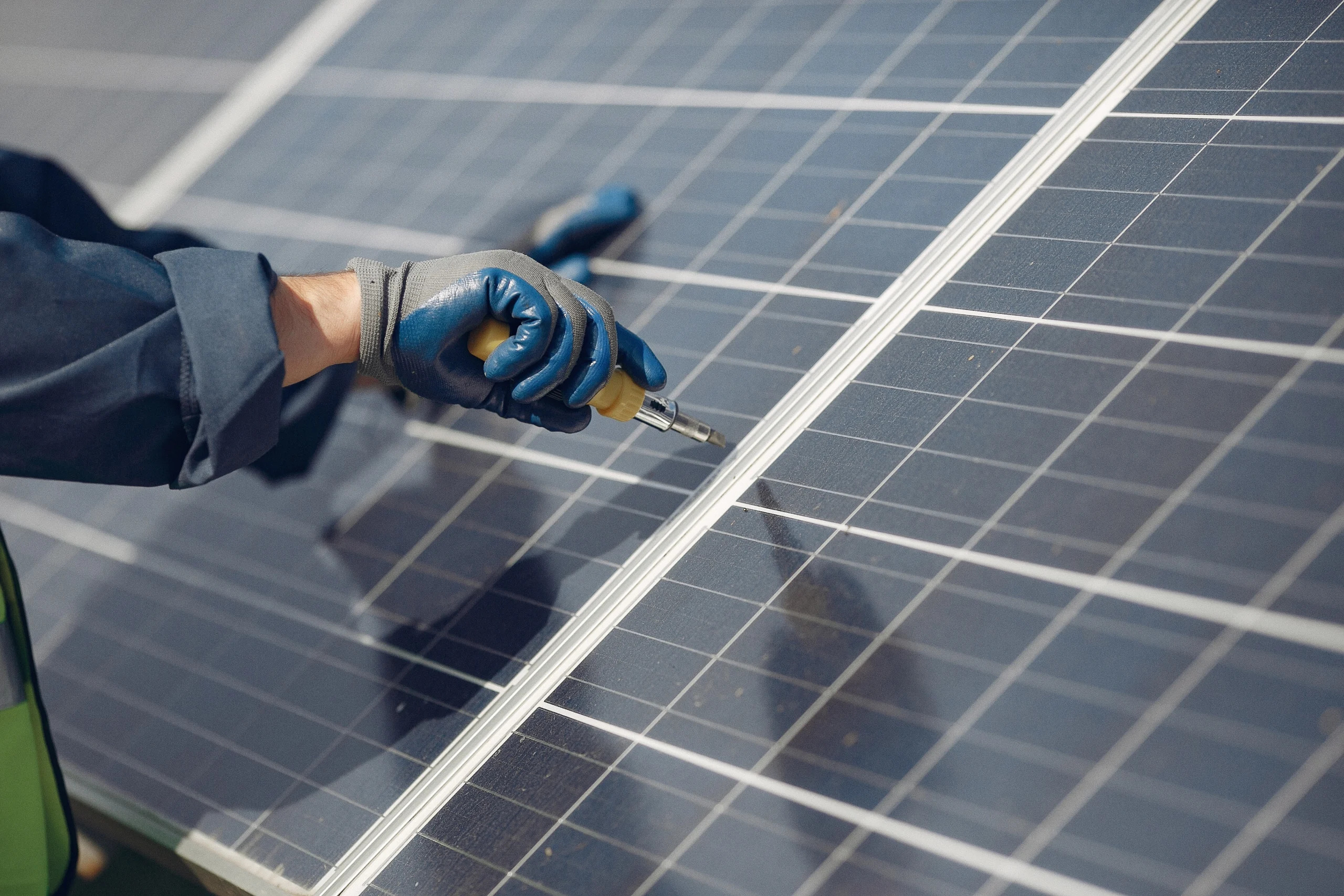
Before your housing society decides on a solar project, it helps to understand how the government subsidy really works. This guide breaks it down in the simplest way, so you know exactly how much you can save and how to claim it.
Many housing societies in cities like Mumbai are facing rising electricity bills for lifts, water pumps, parking lights, and clubhouses. These common-area loads run for long hours, which means higher monthly maintenance for every flat owner.
The Government of India has introduced a major support scheme called PM Surya Ghar: Muft Bijli Yojana. It offers a subsidy for both individual homes and group housing societies that want to set up residential solar rooftop systems. For societies, this subsidy can make rooftop solar much more affordable.
In this blog, we will explain how much subsidy a housing society can get, how it is calculated, and the exact process to apply. If your society is already exploring solar installation in Mumbai, this guide will help you understand the complete picture before you take the next step.
What Is the PM Surya Ghar Solar Subsidy for Housing Societies
The PM Surya Ghar scheme gives financial support to Group Housing Societies and Resident Welfare Associations that install a common rooftop solar plant. This plant supplies power to lifts, pumps, corridor lights, and other shared facilities.
The current guideline allows a subsidy of ₹18,000 per kW for the society’s common-area solar plant. The plant size can go up to 500 kW. The eligible capacity is calculated based on the number of flats. Every flat is allowed up to 3 kW for the society-level plant. This eligible number also includes any individual rooftop systems installed within the society.
This subsidy is separate from the subsidy available to individual flat owners. They receive support based on the size of their residential solar rooftop system, and the slab ranges from ₹30,000 to ₹78,000. Societies and individual homes can apply independently under their respective categories.
How Much Subsidy Can Your Housing Society Actually Get
Your subsidy depends on two things. One is your society’s eligible plant size, and the other is the ₹18,000 per kW subsidy amount.
Here is the simple calculation:
• Eligible capacity = 3 kW multiplied by the number of flats.
• This is compared to the actual planned plant size.
• The lower number is taken as your eligible kW.
• Eligible kW multiplied by ₹18,000 gives your subsidy amount.
Let us understand with an example.
If your society has 50 flats and plans to install a 100 kW plant, the eligible capacity is 50 multiplied by 3 kW, which is 150 kW. Since the planned plant is smaller, the eligible capacity becomes 100 kW. So the subsidy is 100 multiplied by ₹18,000, which is ₹18 lakh.
This subsidy brings down the cost of your project and improves returns. Without a subsidy, payback may take around 5 to 6 years. With subsidy, it can come down to about 3 to 4 years, depending on consumption and state tariff.
For solar panel installation in Mumbai, where common-area loads run for long hours, and electricity tariffs are higher, the subsidy helps societies start saving much faster.
Step-by-Step: How a Housing Society Applies for Solar Subsidy
Step 1: Society decision and load assessment
The committee or the AGM approves the idea of installing solar. A basic load and roof-space study is done with the help of a rooftop solar installation company or local vendor.
Step 2: Registration on the National Portal
The society must register on the National Portal for Rooftop Solar under the PM Surya Ghar scheme. You select your DISCOM, fill in society details, and upload basic information.
Step 3: Feasibility and DISCOM approval
The DISCOM team inspects the rooftop, checks connection details, and confirms technical feasibility. This step is compulsory before starting work.
Step 4: Finalising vendor and plant design
The society chooses an empanelled vendor for solar installation in Mumbai. You finalise the plant capacity, the layout plan, commercial details, and sign the work order.
Step 5: Installation, net metering, and commissioning
The vendor installs the solar plant. This includes panels, structures, wiring, safety devices, and connections to the common meter. The vendor then coordinates with DISCOM to install the net meter and get final commissioning approval.
Step 6: Subsidy credit to the society’s bank account
Once the plant is commissioned and verified online, the subsidy is transferred directly to the society’s bank account. No third party is involved in receiving the subsidy.
Documents and Approvals Your Society Needs to Keep Ready
Your society should prepare the following documents:
• Registration certificate of the society and PAN
• Latest electricity bills of the common-area meter
• Proof of roof ownership or NOC from the developer if required
• KYC documents of the authorised signatory
• Society’s bank account details
• Basic feasibility or layout report from the chosen vendor for solar panel installation in Mumbai
Some DISCOMs may ask for extra forms or structural safety reports, especially for large residential solar rooftop plants. Your vendor will guide you if any additional paperwork is needed.
Why This Is a Big Opportunity for Housing Societies in Mumbai
Maharashtra offers friendly net metering rules that help societies save more. Surplus solar power can be adjusted against eligible common-area connections, which improves long-term value.
Electricity tariffs in Mumbai are on the higher side, and common-area loads operate throughout the day. This makes a rooftop solar system very beneficial for any society looking to reduce monthly expenses. Good sunlight through most of the year further increases energy generation.
With the subsidy and correct planning, a well-designed residential solar rooftop for your society can cut 50 to 80 percent of your common-area bill. This is why many buildings are exploring solar installation in Mumbai as a stable way to reduce maintenance charges for the next 20 to 25 years.
Choosing the Right Rooftop Solar Partner for Your Society
A good vendor makes the entire process simple. When selecting a partner, look for:
• Experience with large housing societies and multi-building layouts
• Knowledge of PM Surya Ghar rules and documentation
• Strong design and engineering skills
• Proper safety practices and quality checks
• Reliable long-term service for smooth performance of your residential solar rooftop plant
Your society should aim for a full-service rooftop solar installation company. A company like this handles surveying, design, approvals, net metering, and the complete subsidy process. They also take care of long-term maintenance.
For projects that need solar installation in Mumbai or solar panel installation in Mumbai, it helps to work with a team that understands local DISCOM rules and site challenges. The right partner makes the experience easy and timely, which reduces the effort for your committee.
Making Solar Subsidy Work Smoothly for Your Housing Society
Solar subsidies can make a big difference for housing societies. It reduces the overall project cost and helps residents recover their investment faster. The challenge is to understand the rules, prepare the right documents, and follow the process correctly so society receives the full benefit. With the right guidance, the entire journey becomes much easier.
At EnergySPOC, we help housing societies understand their subsidy eligibility, complete the paperwork, and set up a solar system that meets all technical and safety requirements. We make the process simple by offering clear guidance, quality installation, and full support even after commissioning.
If your society is planning to switch to solar, we can walk you through each step, from checking the subsidy rules to completing the system in a way that ensures long-term savings. Just reach out, and our team will guide you through the next steps.